Publications

Building a Scientific Community? The WOEPS Workshop and the Evolution of the Economics of Science, 1994–2023

Daniel Souza, Aldo Geuna, Cornelia Lawson (2026)
Economics of Innovation and New Technology, 35(6), 1047–1088
Abstract
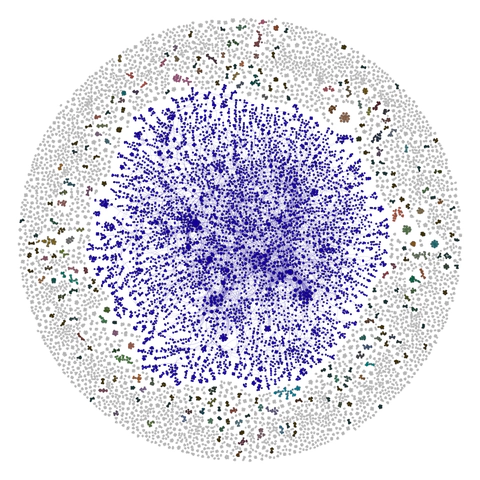
The paper studies the development of the Economics of Science as a new emerging field in the social sciences during the period 1994-2023. To identify the community of scholars working on this new scientific topic, we examine authors citing two seminal papers and use network analysis to investigate the cognitive and organizational characteristics of the community of authors. Our findings suggest that the Economics of Science is still in the process of becoming an independent and cohesive field, exhibiting a highly fragmented structure. We also study the role of the “Workshop on the Organisation, Economics, and Policy of Scientific Research” (WOEPS), initiated in 2007, for the Economics of Science community. We show that WOEPS presenters have more economists of science as coauthors and are better positioned to connect different clusters of authors in the wider Economics of Science network than other members of the network, highlighting its importance for linking scholars in the field. We also show that WOEPS papers are published in higher “quality” journals, receive relatively more citations, and significantly more citations from within the Economics of Science field compared to other Economics of Science papers.
How Small is Big Enough? Open Labeled Datasets and the Development of Deep Learning

Daniel Souza, Aldo Geuna, Jeff Rodríguez (2025)
Industrial and Corporate Change, 34(6), 1322–1365
Abstract
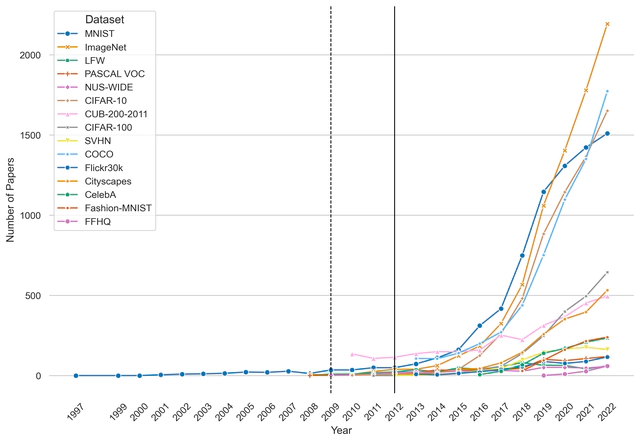
We investigate the emergence of Deep Learning as a technoscientific field, emphasizing the role of open labeled datasets. Through qualitative and quantitative analyses, we evaluate the role of datasets like CIFAR-10 in advancing computer vision and object recognition, which are central to the Deep Learning revolution. Our findings highlight CIFAR-10’s crucial role and enduring influence on the field, as well as its importance in teaching ML techniques. Results also indicate that dataset characteristics such as size, number of instances, and number of categories, were key factors. Econometric analysis confirms that CIFAR-10, a small-but-sufficiently-large open dataset, played a significant and lasting role in technological advancements and had a major function in the development of the early scientific literature as shown by citation metrics.

Artificial intelligence research in Canadian hospitals: The development of metropolitan competencies

Pierre Pelletier, Aldo Geuna, Daniel Souza (2024)
Healthcare Management Forum, 37(6), 445–450
Abstract
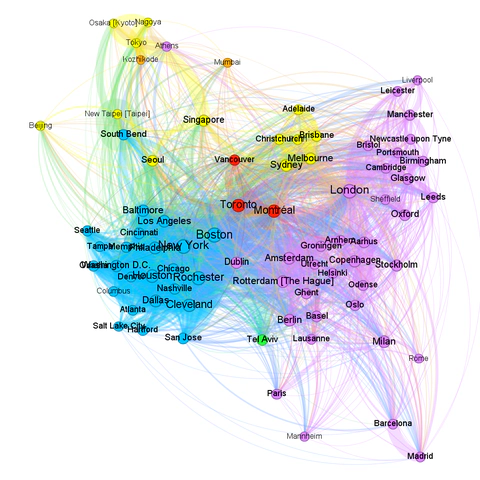
This study explores the deployment of artificial intelligence in Canadian hospitals from 2000 to 2021, focusing on metropolitan areas. We investigate how local public and private research ecosystems and links to national and international AI hubs influence the adoption of AI in healthcare. Our analysis shows that AI research outputs from public institutions have a significant impact on AI competences in hospitals. In addition, collaborations between hospitals are critical to the successful integration of AI. Metropolitan areas such as Toronto, Montreal and Vancouver are leading the way in AI deployment. These findings highlight the importance of local AI research capabilities and international hospital collaborations, and provide guidance to policymakers and healthcare leaders to drive the diffusion of AI technology in healthcare.

The interdisciplinarity dilemma: public versus private interests

Magda Fontana, Martina Iori, Valerio Leone Sciabolazza, Daniel Souza (2022)
Research Policy, 51(7), 104553
Abstract
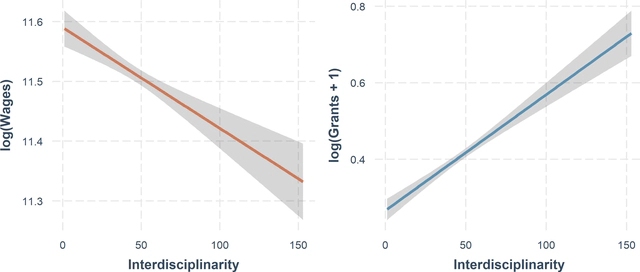
Researchers often receive contrasting incentives when conducting their work. On the one hand, an interdisciplinary approach is required to produce scientific advances and access to funding. On the other, academic scholarships and evaluation mechanisms are still organized following the criteria of traditional disciplinary fields. If pursuing interdisciplinary research results in contrasting outcomes, science may face an interdisciplinarity dilemma. Should researchers pursue their own private interest to build a reputation? Or should they endeavor towards public interest? How costly in terms of reputation is to choose interdisciplinarity research (IDR) over (more) specialized research? We answer these questions by exploiting data on 23,926 articles published by 6,105 researchers affiliated with the University of Florida in the period 2008–2013. Through individual fixed-effect, we compare articles of the same scholar to roll out the influence of individual characteristics on the scientific impact of their research. We find that the diverse dimensions of IDR (Variety, Balance, and Disparity) have a different effect on the reputation of a scholar and on her contribution to societal research. We confirm the existence of trade-off between private and public interest. We also point out that the increase of IDR aiming at connecting distant disciplines reduces the usefulness of the resulting knowledge. Results are robust to various specifications and apply to all scholars, regardless of their gender, collaboration behavior, discipline, and performance. These findings pose challenging questions to policymakers.
Work in Progress

The State of European Entrepreneurship: Trends in Quantity and Quality in France, Germany, and the UK (2009–2023)

Massimo Colombo, Lena Füner, Massimiliano Guerini, Hanna Hottenrott, Daniel Souza (2026)
R&R - European Economic Review
Abstract
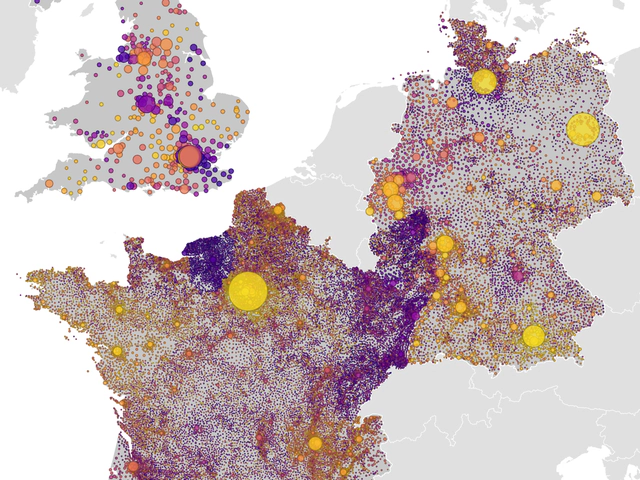
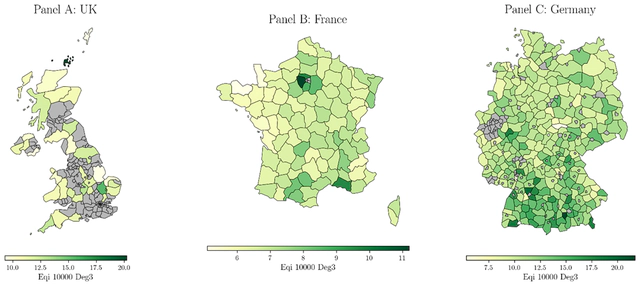
This paper replicates and extends the framework of Guzman and Stern (2020) to examine the evolution of entrepreneurial activity in Europe, focusing on France, Germany, and the United Kingdom between 2009 and 2023. Using harmonized national business registry data, we construct measures of both the quantity and quality of entrepreneurship across regions. In particular, we adapt the Entrepreneurial Quality Index (EQI), the Regional Entrepreneurship Cohort Potential Index (RECPI), and the Regional Entrepreneurial Acceleration Index (REAI) to capture the number of new ventures, their ex-ante growth potential, and the extent to which ecosystems translate this potential into realized outcomes. Our findings support the generalizability of this framework in the European context while revealing substantial heterogeneity across countries and regions. Major metropolitan centers such as Paris, London, and Munich combine high rates of entry with high entrepreneurial quality, but smaller knowledge- and research-intensive regions – including Cambridge, Oxford, Bonn, and Heidelberg – also emerge as important hubs. With respect to ecosystem performance, France and the UK initially exceeded expectations but later experienced steady declines, whereas Germany maintained relatively stable performance, with notable overperformance between 2012 and 2016. Moreover, we find a stronger positive correlation between entrepreneurial quantity and quality in Europe, suggesting that ecosystems capable of generating more start-ups are also more likely to produce high-quality firms. This study provides important insights for the comparative analysis of entrepreneurial ecosystems and builds a foundation for designing policies aimed at fostering high-quality, innovation-driven entrepreneurship in Europe.

Rural Entrepreneurship in Europe: Understanding Key Enabling Factors

Massimo Colombo, Lena Füner, Massimiliano Guerini, Hanna Hottenrott, Simone Sasso, Daniel Souza (2026)
Submitted - Technological Forecasting and Social Change
Abstract
Entrepreneurship plays a critical role in fostering economic development and regional resilience. This study examines the nature and determinants of rural entrepreneurship across the UK, France, and Germany, focusing on both the quantity of new business formation and the quality of entrepreneurial activity, as proxied by growth-oriented start-ups. Using harmonized regional-level data, we identify key structural and ecosystem factors associated with rural entrepreneurship and assess the role of urban–rural spillovers and geographic remoteness. The analysis reveals substantial variation across countries and highlights the limited predictive power of traditional ecosystem components such as venture capital, innovation output, and human capital. In contrast, proximity to urban centers and linkages with non-rural entrepreneurial activity emerge as robust drivers of rural entrepreneurship. The findings offer novel insights for designing context-sensitive policies to support high-potential ventures in rural areas and promote more inclusive regional innovation systems.